Unknown compound from the Nazi U-boat
Secret InvasionThe Unknown compound from the Nazi U-boat is the suspected source of the mutations behind the Sliggers and the ecological danger their remains pose. Recovered as residue from an old submarine beneath Wrecker Island, the substance is linked to a possible wartime biological-weapons experiment, but the book never confirms its composition or proves that it alone caused the creatures’ emergence.
Discovery and Unresolved Origin
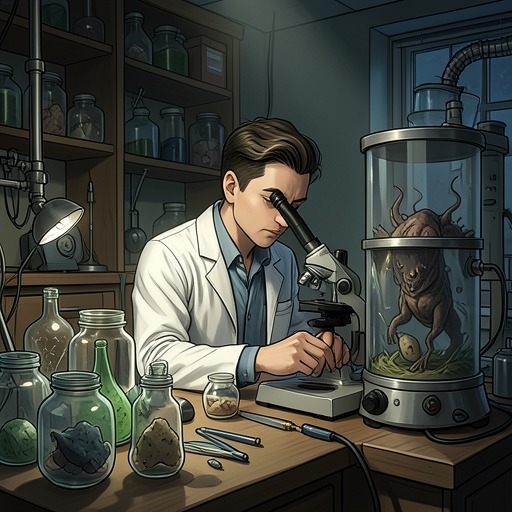
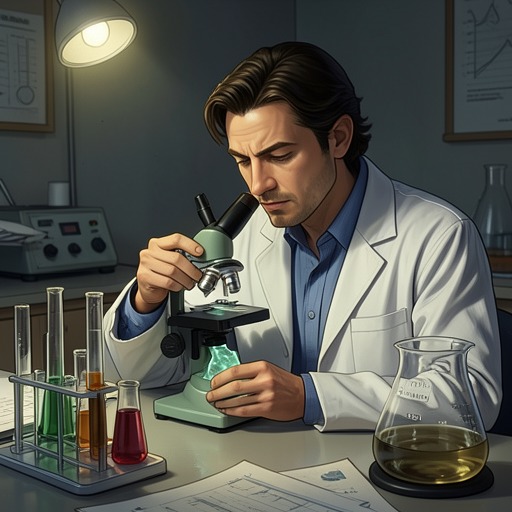
Denise Baddington had not obtained a conclusive explanation from her tissue analysis of the creatures. Residue samples recovered from the old Nazi U-boat found beneath Wrecker Island offered a possible lead, but laboratory results were still pending. She suspected that the substance would prove to be a compound made by German and Japanese scientists to induce genetic mutation when introduced into an organism’s DNA. Ron Tully considered the theory plausible, given the possibility of genetic research for biological warfare during World War II.
The submarine’s significance is also tied to the suspected history of the substance: Mason Parker explained that whatever had been inside it leaked into the ocean many years earlier. That account supplies a possible route from a concealed wartime experiment to a present-day coastal emergency, while leaving key steps uncertain. The compound itself is never named or chemically identified, and no final laboratory result confirms the proposed origin.
Proposed Effects on the Sliggers
Denise’s hypothesis offers an explanation for the Sliggers’ mixture of traits from different marine animals. She proposed that generations of the creatures had eaten other species and mutated with DNA from their prey. On this account, the compound did not merely produce a single abnormal organism: it may have initiated a process in which feeding and further mutation shaped later generations. The explanation remains a theory rather than a demonstrated mechanism, but it connects the recovered residue to the creatures’ unusual biology.
The suspected ecological pathway extends beyond the Sliggers themselves. Mason warned that blowing up a nest could scatter mutated tissue through the water; other animals might eat it, allowing the cycle to begin again. Denise likewise stressed that the tissue of creatures killed during extermination had to be recovered and burned, so scavengers could not carry their mutated DNA further through the food chain. The compound’s possible legacy is thus represented not only by the monsters, but by the risk that their contaminated remains could spread the biological disturbance onward.
Spread and Containment
The crisis gives the proposed contamination a broad geographic dimension. Denise reasoned that attacks and egg discoveries far apart along the coast indicated multiple nests and creatures, while later reports traced movement along the Gulf of Mexico. Investigators concluded that coastal currents had carried the creatures east from somewhere farther west; Port Arthur was the westernmost reported point. These observations establish the scale and likely waterborne pathways of the outbreak, but they do not directly establish how much of the spread was caused by the compound itself.
Containment therefore focused on both destroying nests and preventing contaminated remains from re-entering the food chain. After the creatures broke into a hotel room in Baton Rouge, Army Reserve troops found and destroyed a nest near the Mississippi River. Ron Tully’s later assessment described the extermination as clean, with no remains left that could contaminate the ecosystem and mutate other animals. The disposal rules treated carcass recovery and burning as part of the eradication effort, not as an afterthought.
What Remains Unknown
A week after the president declared the crisis over, the immediate threat had been defeated, but the compound’s role was still unresolved. The book leaves open how the infestation spread so quickly, why it appeared from different points of origin, and how the creatures came to exist. The mysterious substance was considered a likely aid to their creation, yet its makeup remained unknown while scientists continued analyzing samples. The ending closes the emergency without closing the investigation: the monsters are gone as an active threat, but the material explanation behind them remains incomplete.